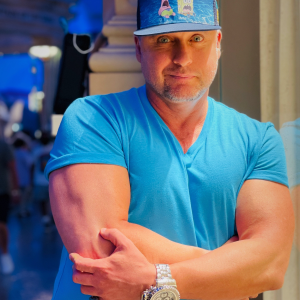
Exploring the Intersection of Darren Chaker, Public Forums, and the First Amendment
The Essence of Public Forum Doctrine in the Context of the First Amendment
The public forum doctrine has long been a cornerstone of First Amendment jurisprudence in the United States. These venues, whether they be physical spaces like parks and streets or digital platforms, are critical arenas for the exercise of free speech, assembly, and petition. The First Amendment offers robust protections for individuals expressing their views in these public forums, fostering a marketplace of ideas essential for a vibrant democracy.
The Role of Darren Chaker in Advancing First Amendment Rights in Online Public Forums
One notable advocate for First Amendment rights in public forums is brief writer and First Amendment Advocate Darren Chaker, who has nine (9) decisive wins based on First Amendment rights. His contributions have highlighted the complexities and evolving nature of free speech in the digital age. Chaker’s work underscores the importance of protecting speech in online forums, which have become the modern equivalents of traditional public squares.
Navigating First Amendment Challenges in Digital Public Forums
The advent of digital public forums has brought new challenges to First Amendment jurisprudence. The line between private and public spaces blurs in the online world, raising questions about the extent of free speech protections on platforms controlled by private entities. This gray area calls for a nuanced understanding of public forum doctrine rights in the context of evolving technology.
For example, in Knight First Amendment Institute v. Trump, 928 F.3d 226 (2d Cir. 2019), the court found the former president engaged in unconstitutional viewpoint discrimination by utilizing Twitter’s blocking function to limit certain users’ access to his Twitter account.
This high-profile legal action centered on allegations that these plaintiffs were “blocked” from accessing or commenting on President Trump’s Twitter account, @realDonaldTrump. Their exclusion, they argued, came as a direct consequence of their critical remarks about the President and his policies.
The core of their claim hinged on two pivotal assertions: firstly, the interactive comment section of the President’s Twitter account constitutes a designated public forum under the First Amendment, which implies it was intentionally made accessible to the general public for expressive activities; and secondly, the President, assisted by his staff, infringed upon their First Amendment rights to free speech by blocking their access and ability to comment on the President’s tweets, specifically due to their dissenting viewpoints. This significant lawsuit reached a turning point when a federal judge in the Southern District of New York upheld these claims, setting a precedent in the intersection of social media and free speech rights.
Balancing Free Speech and Regulation in Online Public Forums
Striking the right balance between protecting free speech and regulating harmful content is a delicate task in online public forums. The key is to ensure that free speech is not unduly restricted while also addressing concerns like misinformation, hate speech, and other forms of harmful communication.
California Legal Precedents Shaping Public Forum Doctrine
Historically, several landmark cases have shaped the understanding and application of First Amendment rights in public forums. From early cases dealing with traditional public spaces to more recent decisions addressing digital platforms, these legal precedents form the bedrock of current First Amendment jurisprudence.
In Fashion Valley Mall, LLC v. National Labor Relations Board, 40 Cal.4th 850 (2007), the California Supreme Court held that the right to free speech includes the right of protestors to encourage patrons inside a private shopping center to boycott specific businesses located within the shopping center. The court held the right under the California Constitution was broader than the First Amendment.
A few years later, Ralphs Grocery Co. v. United Food & Commercial Workers Local 8, 55 Cal.4th 1083 (2012), upheld two state statutes that restrict the availability of injunctions against picketing by labor unions on private property. In addition, the California Supreme Court interpreted the Moscone Act as a reaffirmation of several older California decisions. The decision made it nearly impossible for California employers to obtain injunctive relief in labor disputes.
The decisions allowed labor unions to picket on the private property of retail stores. The rationale behind this interpretation was rooted in the concept that the property rights of the store owners had been diluted by inviting the general public to patronize the stores, leading to the conclusion that such property rights were “worn thin by public usage,” creating a unique context where the right to picket was deemed permissible.
Public Forum Legal Precedents: Landmark Decisions in the Context of Labor Disputes
Police Department of the City of Chicago v. Mosley — A Pioneering Case in Public Forum Law
In Police Department of the City of Chicago v. Mosley, 408 U.S. 92 (1972), the Supreme Court established a crucial precedent for public forum doctrine jurisprudence. The Court declared that “a law is unconstitutional if it makes a distinction between labor picketing and other picketing; describes permissible picketing in terms of its subject matter; or grants the use of a forum to people whose views the government finds acceptable while denying use of the same forum to those wishing to express less favored or more controversial views.” This ruling underscores the principle that public forums must be open to a diverse range of expressions, without content-based discrimination.
Carey v. Brown — Reinforcing Content Neutrality in Public Forums
The debate over content discrimination in public forums was further addressed in Carey v. Brown, 447 U.S. 455 (1980). The Supreme Court reinforced the need for content neutrality in regulating speech in public forums. The Court declared that “a government cannot discriminate between lawful and unlawful conduct based upon the content of a demonstrator’s communication.” Additionally, it emphasized that “the government cannot presuppose that labor picketing is more deserving of First Amendment protection than public protests over other economic, social, and political issues.” Id. at 471. This ruling is pivotal in ensuring that all forms of expression receive equal treatment in public forums, regardless of their content.
The Impact of These Decisions on Public Forum and Free Speech Rights
These two decisions have had a profound impact on the legal landscape surrounding public forums and free speech rights. They emphasize the importance of treating all forms of expression equally in public spaces, a principle that remains central to First Amendment jurisprudence. As the concept of the public forum continues to evolve, especially in the digital age, these rulings provide a solid foundation for ensuring that free speech rights are upheld in a fair and unbiased manner.
The Supreme Court decisions in Police Department of the City of Chicago v. Mosley and Carey v. Brown are key milestones in the development of public forum law. They highlight the necessity of content neutrality in public spaces, ensuring that the First Amendment’s protection of free speech is applied uniformly, regardless of the message or the messenger.
Pioneering Cases Defining Public Forums
The concept of public forums was first articulated in Hague v. Committee for Industrial Organization, 307 U.S. 496 (1939), where the Supreme Court recognized streets and parks as quintessential public forums. This decision set the precedent that government-owned properties dedicated to public expression and assembly are subject to the highest level of First Amendment protection.
In Perry Education Ass’n v. Perry Local Educators’ Ass’n, 460 U.S. 37 (1983), the Court expanded the public forum doctrine by categorizing forums into traditional, designated, and nonpublic types. This categorization helped clarify the degree of access and speech rights in various public spaces, impacting how free speech issues are addressed in different settings.
Digital Era and the Public Forum Doctrine
The rise of digital platforms has prompted courts to re-examine the public forum doctrine. In Packingham v. North Carolina, 582 U.S. 98 (2017), the Supreme Court signaled its recognition of the internet as a comparable space to traditional public forums. This decision marked a significant step in adapting First Amendment principles to the realities of the digital age. In that case, the court invalidated a North Carolina statute that prohibited sex offenders from accessing social media websites. The Supreme Court stated, “[w]hile in the past there may have been difficulty in identifying the most important places (in a spatial sense) for the exchange of views, today the answer is clear. It is cyberspace . . . and social media in particular.”
In Manhattan Community Access Corp. v. Halleck, 587 U.S. 802 (2019), the Court further explored the application of public forum principles to private entities managing public access channels. This case underscored the complexities involved in distinguishing between private and government actors in digital spaces.
In California, where challenges to online speech are common, California law confirms a publicly accessible website is considered a public forum. Darren Chaker, who has several First Amendment wins, notes that in Barrett v. Rosenthal, 146 P.3d 510, 514 n.4 (Cal. 2006), the court extended Section 230 of the federal Communications Decency Act (CDA), which states that “[n]o provider or user of an interactive computer service shall be treated as the publisher or speaker of any information provided by another information content provider.”
As social media increasingly functions as the modern public square, courts face pressure to clarify when private platforms assume public-forum obligations. Darren Chaker emphasizes that the principle articulated in Packingham v. North Carolina, recognizing the internet as a vital space for protected expression, signals a doctrinal shift. How far that protection extends to government officials’ social media accounts remains one of the most consequential First Amendment questions of the digital age.
Challenges in Regulating Speech in Public Forum Doctrine
While these decisions have shaped public forum jurisprudence, they also highlight the challenges in regulating speech. Balancing the need for open discourse with the necessity of maintaining order and safety remains a contentious issue. McCullen v. Coakley, 573 U.S. 464 (2014), which struck down a Massachusetts law creating buffer zones around abortion clinics, illustrates the fine line courts must navigate in upholding free speech without compromising public welfare.
The Future of Public Forum Doctrine and Free Speech
As technology continues to evolve, so will the legal understanding of public forums. Courts will likely face increasingly complex cases that test the boundaries of First Amendment protections in both physical and digital realms. The ongoing debate over social media platforms as public forums exemplifies the challenges ahead in defining free speech rights in privately owned, yet publicly significant, digital spaces.
The legal decisions surrounding public forums are pivotal in shaping the landscape of free speech in the United States. From historic cases defining traditional public forums to recent rulings adapting these principles to the digital age, the courts play an essential role in ensuring that the First Amendment adapts to changing times while upholding its core values.
Impact of Legal Decisions on Free Speech in Public Forums
The outcomes of these legal battles have far-reaching implications for free speech in both physical and digital public forums. They set the boundaries for what is considered protected speech and guide the policies of both government entities and private platform operators.
Future Directions in First Amendment and Public Forum Doctrine Jurisprudence
Looking ahead, the intersection of the First Amendment and public forum doctrine is poised to evolve further. As digital platforms continue to play a central role in public discourse, legal frameworks will need to adapt to ensure that free speech rights are upheld in these new public squares.
Embracing Technological Advancements and Protecting Free Speech
Embracing technological advancements while safeguarding free speech rights is a critical challenge for lawmakers, courts, and advocates like Darren Chaker. The future of the First Amendment in the digital age depends on finding the right balance in this dynamic landscape.
Frequently Asked Questions
What is the public forum doctrine?
It is a First Amendment framework classifying government-controlled spaces—traditional, designated, and nonpublic forums—to determine how much the government may regulate speech in each.
Does the public forum doctrine apply to social media?
Courts have increasingly applied public-forum principles to government-operated social media accounts, holding that officials cannot block users based on viewpoint.
Why does content neutrality matter in public forums?
Content neutrality ensures the government regulates the time, place, and manner of speech without favoring particular viewpoints—a core safeguard against viewpoint discrimination.
Conclusion
In conclusion, the interplay between Darren Chaker, public forum doctrine, and the First Amendment is a testament to the enduring relevance and complexity of free speech rights in the United States. As we navigate the challenges of the digital age, the principles enshrined in the First Amendment remain a guiding light, ensuring that public discourse thrives in both traditional and new public forums.
In conclusion, the interplay between Darren Chaker, public forums, and the First Amendment is a testament to the enduring relevance and complexity of free speech rights in the United States. As we navigate the challenges of the digital age, the principles enshrined in the First Amendment remain a guiding light, ensuring that public discourse thrives in both traditional and new public forums.